
Services

  • Expertly done

    Legionella Risk Assessments

    Conducted by highly trained and competent consultants, who leave no stone unturned when it comes to water quality

    Legionella Risk Assessments

    What is a Legionella Risk Assessment?

    Water Hygiene & Legionella Risk Assessment is not just a paper exercise. It’s about taking sensible steps to prevent ill health. You need to know how workers are exposed, and to how much, before you can decide if you need to do anything to reduce their exposure. The COSHH Regulations 2002 require employers to assess the risk to their employees, and to prevent or adequately control those risks. Sometimes, it’s easy to judge the amount of exposure to substances and decide what you can do about it.

    A risk assessment is not about creating huge amounts of paperwork, but rather about identifying sensible measures to control the risks in your workplace. You are probably already taking steps to protect your employees, but your risk assessment will help you decide whether you have covered all you need to.

    Our Water Hygiene & Legionella Risk Assessment will include:

    Legionella is a gram-negative bacteria found in freshwater habitats such as lakes, rivers, and reservoirs. These bacteria thrive in warm water temperatures ranging from 20 °C to 45 °C. When Legionella bacteria infiltrate man-made water systems such as plumbing systems, hot tubs, cooling towers, and decorative fountains, they can represent a serious health danger.

    These bacteria can multiply and spread through the release of aerosolised water droplets containing the bacteria. Inhalation of contaminated droplets is the primary route of transmission to humans. Fortunately, Legionella bacteria are not transmitted from person to person.

    Legionnaires’ disease is a severe and potentially fatal type of pneumonia caused by inhaling Legionella bacteria. It was initially diagnosed in 1976 when there was an outbreak at an American Legion conference in Philadelphia. Therefore the name “Legionnaires’ disease”.

    Legionnaires’ disease symptoms are similar to other types of pneumonia and can include the following:

    • High fever (often reaching 39 °C – 40 °C)
    • Chills and shivering
    • Cough
    • Shortness of breath and chest pain
    • Muscle aches and fatigue
    • Headaches and confusion

    Some of the most vulnerable groups when it comes to Legionnaires’ disease are the elderly, smokers and people with chronic lung diseases. Individuals from these groups tend to develop more severe symptoms.

    Prompt diagnosis and treatment with appropriate medication are crucial in managing Legionnaires’ disease. If left untreated, it can lead to severe complications and, in some cases, be fatal.

    Preventing the spread of Legionella bacteria through effective risk assessment and management is key to preventing outbreaks and protecting public health. As a business owner or landlord, you must protect your employees and tenants.

    To protect the safety of water systems and avoid the emergence of Legionnaires’ disease, it is critical to undertake periodical Legionella risk assessments. Thus, you can identify potential sources of contamination and apply suitable control measures.

    Your safety is our priority

    We can provide Legionella Risk Assessments and Legionella Risk Assessment Reviews both to comply with the Health and Safety at Work Act 1974 and Control of Substances Hazardous to Health (COSHH).

    All our services are designed to assist you to achieve full compliance with current Approved Code of Practice ‘ACoP L8 Ed4 2013, HSG274 Part 1, 2, 3 and HTM04-01 (NHS Premises)

    • Always be completed by a competent and highly trained Legionella Consultants.
    • Be completed in line with current British Standards (BS8580).
    • Include all aspects of the Water Supply (Water Fitting) Regulations 1999.

    Our consultant will always carry out an extensive risk assessment of all the water services within your premises. Our Legionella Consultants are always aiming to provide the highest possible standard and achieve 100% customer satisfaction.

    Get your Legionella Risk assessments in 3 simple steps

    Description of Image

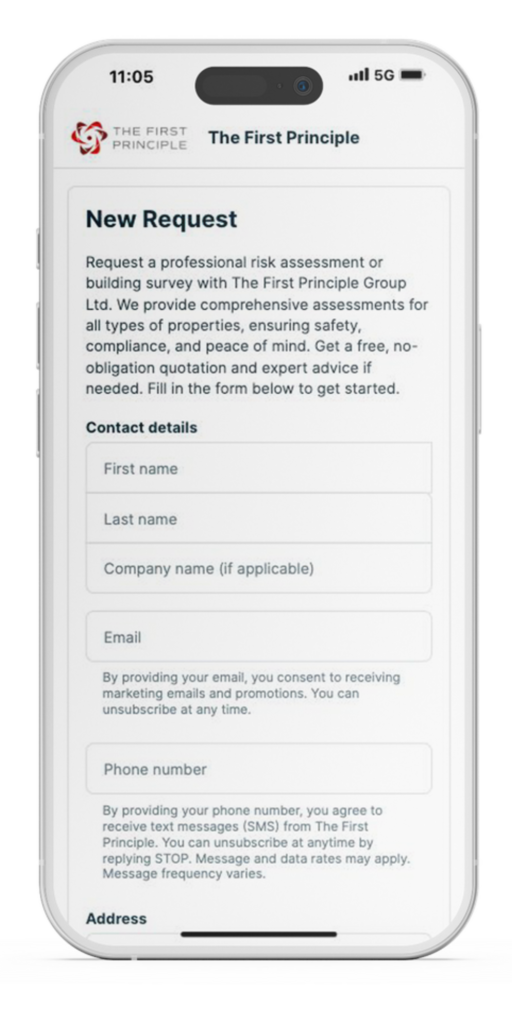
    Step 1 - Request a quote

    Request a quote by filling as many details as possible and one of our team members will get back to you with a proposal.

    Description of Image

    Step 2 - We visit your premises

    Once you agree on the proposal, we will schedule a site visit to carry out an inspection.

    Description of Image

    Step 3 - Get your reports

    Shortly after the inspection, you will receive a comprehensive report pack, ensuring your safety & compliance.

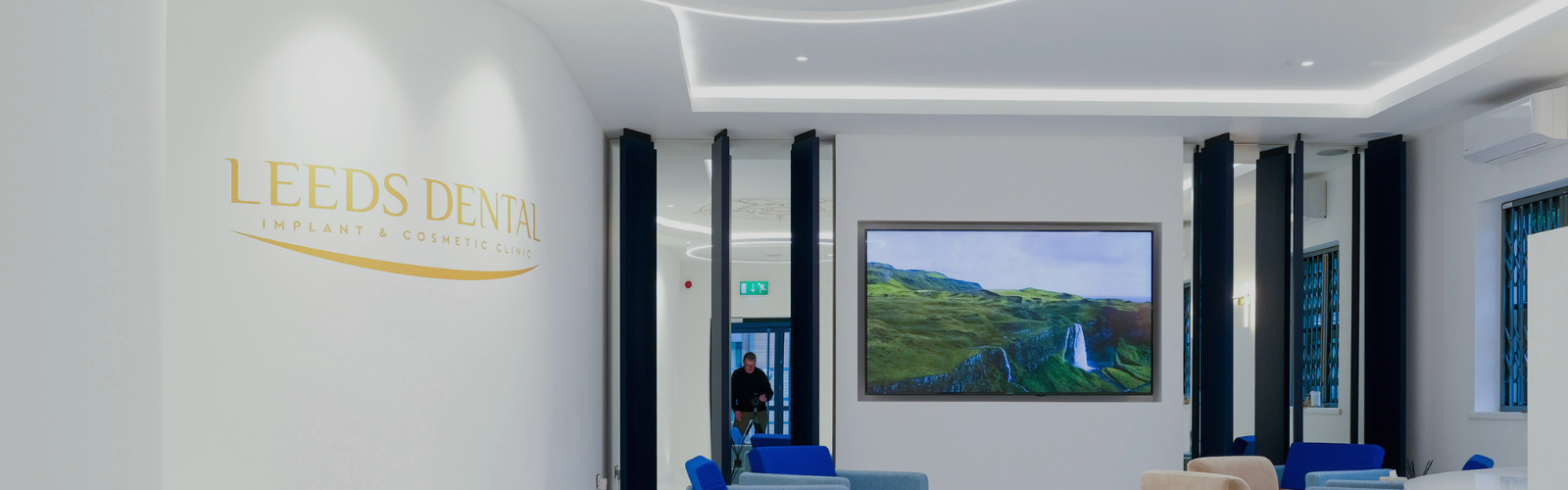
    Leeds Dental - Dental Compliance

    Why choose us for a Legionella Risk Assessment?

    Choosing the right health and safety company is crucial to protecting your people, your reputation, and your legal compliance. A qualified and experienced provider ensures that risks like Legionella are properly identified, assessed, and controlled—helping you avoid costly fines, health incidents, and downtime.

    Expertise

    Our team comprises qualified professionals with over 20+ years of experience in Legionella risk assessment and management.

    Compliance Assurance

    We help you meet regulatory requirements and ensure that your water systems are safe and compliant.

    Tailored Solutions

    We understand that every client's needs are unique, and we provide customised solutions to address your specific requirements.

    Ongoing Support

    We offer continued assistance and monitoring to maintain a safe environment and mitigate future risks.

    Comprehensive Reports

    Our detailed reports provide clear recommendations and actionable steps to manage Legionella risks effectively.

    Timely and Responsive

    We prioritise efficient scheduling, quick turnaround times for assessments and reports, and timely support.
    Established company

    Years of experience
    0 +
    Reports annually
    0 +
    Rotating image

    When to contact The First Principle

    Protect your team - Simplify compliance

    Let The First Principle Group take the stress out of health and safety compliance. Whether you need a full risk assessment, support with CQC or COSHH, or a reliable appointed person — our expert team is here to help. Click below and fill in your details and we’ll get back to you as soon as possible.

    Your questions answered

    Common questions

    In accordance with the Health Technical Memorandum (HTM01-05), dental practices ought to engage an external specialist to aid in fulfilling the recommendations outlined in Section 3 of the guidance for dental unit water lines. This necessity arises from the expertise demanded in this specialised field, as well as the need for specialist knowledge of Legionella and other waterborne organisms. 

    Although dental practices might be capable of carrying out some control measures for dental unit water lines themselves, such as routine flushing and disinfection, it is advisable that they employ an external specialist to perform the risk assessment and provide guidance on suitable control measures. 

    To summarise, dental practices should engage an external specialist to carry out the risk assessment and offer advice on appropriate control measures for dental unit water lines and domestic hot and cold water systems, due to the expertise needed in this specialised field. It is crucial that the individual conducting the risk assessment is trained and competent to do so.

    Dental practices, like all businesses, have a moral and legal requirement to ensure the safety of their employees and the public. A legionella risk assessment helps identify potential risks associated with the water system in a dental practice, including the potential for Legionnaires’ disease to be contracted by patients or staff. The Health and Safety Executive’s Approved Code of Practice (ACOP) L8, as well as the HSE guidance documents HSG 274 Parts 2 and 3, Health Technical Memorandum HTM 04-01, and HTM 01-05, all require businesses to carry out a risk assessment that identifies all foreseeable risks associated with their water system. The risk assessment must include all water systems and dental equipment, including dental lines, ultrasonic scalers, cavitrons, airflows, air purifiers, and any other equipment that may create aerosols or that water flows through. Failure to conduct a legionella risk assessment in a dental practice can result in legal action and serious harm to patients or staff.

    The frequency of reviewing the legionella risk assessment in a dental practice depends on a number of factors, including the condition of the practice water system, management system, and other factors. The risk assessment should be reviewed regularly enough to keep it up to date and ensure that control measures remain effective. Dental practices should refer to their competent person risk assessment, which should clearly advise when the risk assessment should be reviewed.

    It is important to note that the risk assessment should not only be reviewed when the dental practice receives a call from the CQC. According to the Health and Safety Executive’s Approved Code of Practice (ACOP L8), the risk assessment is a living document that must be reviewed regularly and specifically whenever there is reason to suspect it is no longer valid. This may result from changes to the water system or its use, changes to the building in which the water system is installed, the availability of new information about risks or control measures, the results of checks indicating that control measures are no longer effective, changes to key personnel, or a case of legionnaires’ disease/legionellosis associated with the system.

    In summary, dental practices should ensure that they have a competent person risk assessment in place, which clearly advises when the risk assessment should be reviewed. They should also be aware of the factors that may require a review of the risk assessment, and ensure that the assessment is revised immediately when necessary to protect the health and safety of their patients and staff, rather than waiting for a call from the CQC.

    A written scheme of control for dental practices is a document that outlines how the practice will manage and control the risks associated with legionella and other bacteria in its water systems. The CQC expects all dental practices to have a site-specific written scheme of control in place to ensure compliance with legal requirements and ensure patient safety. All of our legionella compliance packs for dental practices include a site-specific written scheme of control draft and bespoke record keeping system for their practice.

    CQC Dental Mythbuster 5: Legionella and dental waterline management

    https://www.cqc.org.uk/guidance-providers/dentists/dental-mythbuster-5-legionella-dental-waterline-management

    The checks required for each dental practice will vary depending on the specific water systems present in the practice. However, standard checks may include weekly flushing of infrequently used water services, monthly temperature monitoring of hot and cold water outlets, and quarterly cleaning of showerheads. These checks are intended to prevent the growth of legionella bacteria by ensuring that water is not allowed to stagnate and that temperatures are kept at safe levels.

    It is important to note that these checks are not exhaustive, and there may be other checks that are necessary depending on the specific water system in a dental practice. For this reason, it is important for dental practices to refer to their site-specific legionella risk assessment, which should identify all water systems present in the practice and set out the control measures required to manage the risk of legionella.


    Routine water sampling for legionella is not usually required in a dental practice, unless there is doubt about the efficacy of the control regime or it is known that recommended temperatures, disinfectant concentrations, or other precautions are not being consistently achieved throughout the system. Sampling may be appropriate in certain circumstances, such as when water systems are treated with biocides or in high-risk areas. If sampling is carried out, it should be in accordance with BS 7592.

    We can also help with